
The digital economy increasingly relies on accurate forecasting to guide decisions. Businesses want reliable insights about future trends, whether they involve financial markets, political developments, technological breakthroughs, or global events. Traditional forecasting models often depend on centralized data sources or expert predictions, but decentralized prediction markets are changing this landscape by leveraging collective intelligence.
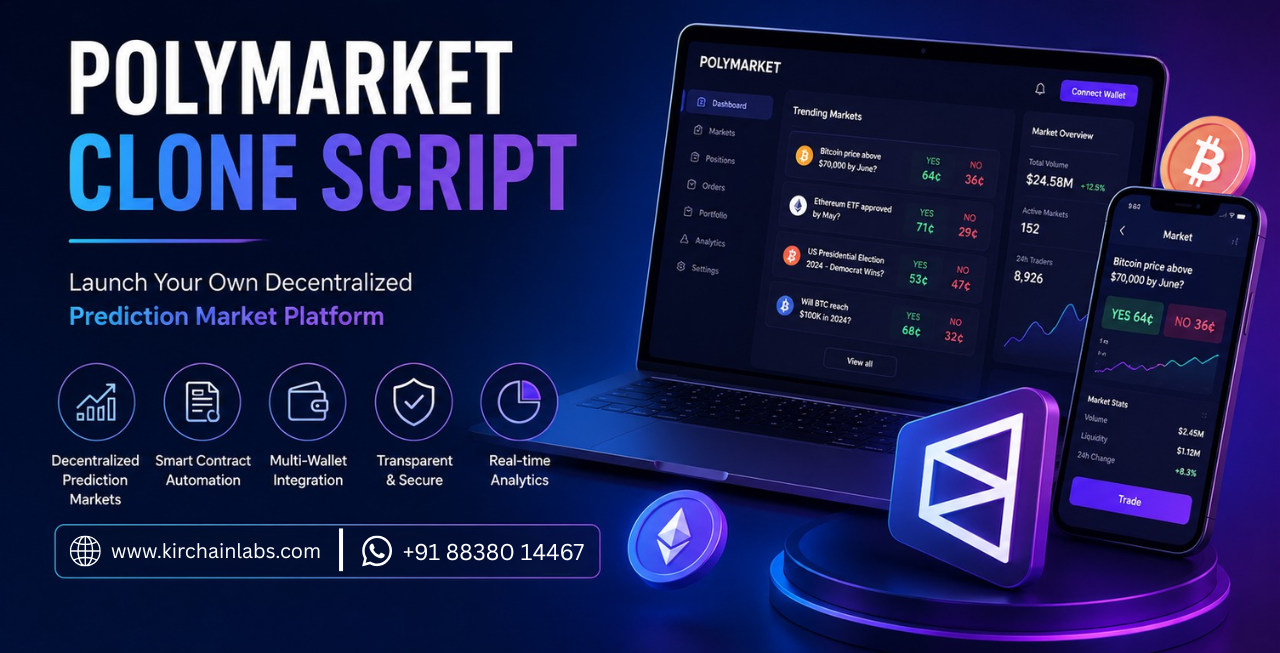
Platforms inspired by Polymarket prediction bot development are enabling organizations to build intelligent forecasting ecosystems where users can trade on the probability of future outcomes. These platforms combine blockchain transparency with automated trading tools, allowing participants to analyze events and contribute to a dynamic, data-driven prediction environment.
For businesses exploring the future of decentralized forecasting, building an intelligent prediction platform requires strategic planning, advanced automation, and reliable infrastructure.
Understanding Intelligent Forecasting Platforms
An intelligent forecasting platform is a system where users predict the likelihood of real-world events through market-based mechanisms. Participants buy and sell outcome shares based on their expectations, and market prices reflect the collective probability of an event occurring.
Unlike traditional forecasting models that rely on limited datasets, prediction markets aggregate insights from diverse participants. This approach often produces more accurate forecasts because it incorporates multiple perspectives and real-time information.
By integrating prediction market automation, businesses can further enhance these systems. Automated bots monitor market movements, evaluate probability shifts, and execute trading strategies instantly. This combination of human intelligence and algorithmic automation forms the foundation of modern decentralized forecasting platforms.
Why Businesses Are Investing in Prediction Market Technology
Prediction markets are gaining attention across industries because they transform forecasting into an interactive and data-driven process. Organizations use them to evaluate trends, gather insights, and understand market sentiment.
Some of the primary reasons businesses are adopting these platforms include:
· Improved decision-making: Market-driven forecasts often provide more reliable predictions.
· Real-time event analysis: Prediction markets react quickly to new information.
· Community-driven intelligence: Large user participation improves forecasting accuracy.
· Transparent data systems: Blockchain technology ensures secure and verifiable transactions.
By incorporating automated trading tools and analytics, businesses can turn these platforms into intelligent forecasting ecosystems capable of adapting to rapidly changing global events.
The Role of Polymarket Prediction Bots in Forecasting Platforms
Prediction bots are automated programs designed to interact with decentralized prediction markets. They analyze market activity, detect probability changes, and execute trades based on predefined strategies.
In the context of Polymarket prediction bot development, these bots serve several important functions:
· Monitoring multiple markets simultaneously
· Responding instantly to event-driven updates
· Automating trading strategies
· Analyzing historical and real-time market data
This automation enables forecasting platforms to operate more efficiently and ensures that markets remain active and responsive.
Core Components and Steps of Building an Intelligent Prediction Platform
Building a successful decentralized forecasting platform requires a combination of technological components. Each element contributes to the reliability and efficiency of the system.
1. Decentralized Market Infrastructure
The foundation of any prediction platform is a decentralized infrastructure built on blockchain technology. Smart contracts manage market creation, trade execution, and settlement processes.
Blockchain integration ensures that all transactions remain transparent and tamper-resistant. Participants can verify outcomes and trading records, which increases trust within the platform ecosystem.
2. Automated Trading Bot Integration
Automated trading bots are essential for maintaining active and efficient markets. These bots execute strategies based on probability changes and market conditions.
Key features of prediction trading bots include:
· Real-time event monitoring
· Automated trade execution
· Probability analysis algorithms
· Risk management systems
These capabilities help ensure that forecasting markets remain dynamic and responsive to new information.
3. Data Analytics and Event Monitoring
Prediction markets are closely tied to real-world developments. Businesses must integrate advanced data analytics tools that track news updates, social media sentiment, economic indicators, and other relevant signals.
Event monitoring systems feed data into prediction bots, enabling them to react instantly when significant developments occur. This real-time data processing improves forecasting accuracy and strengthens market responsiveness.
4. User-Friendly Market Interfaces
While automation plays a major role in prediction markets, user experience remains equally important. Platforms must provide intuitive dashboards that allow users to explore markets, analyze probabilities, and execute trades easily.
Features such as event timelines, market probability charts, and portfolio management tools enhance engagement and make forecasting platforms more accessible to a wider audience.
5. Liquidity and Market Stability
Liquidity is critical for maintaining efficient prediction markets. When there are enough active participants, price movements accurately reflect collective sentiment.
Prediction bots contribute significantly to liquidity by continuously placing trades and adjusting positions based on probability changes. This activity keeps markets active even during periods of low human participation.
Strategic Benefits for Businesses
Organizations that develop intelligent forecasting platforms can unlock several strategic advantages.
First, prediction markets provide valuable insights into public sentiment and emerging trends. Businesses can analyze market probabilities to understand how participants perceive upcoming events.
Second, these platforms create new engagement opportunities by allowing users to actively participate in forecasting activities. This interactive model encourages community involvement and strengthens platform adoption.
Third, automation improves operational efficiency. Prediction bots handle complex data analysis and trading tasks, reducing the need for manual monitoring while maintaining high levels of accuracy.
Finally, decentralized forecasting platforms can expand into multiple sectors, including finance, politics, sports analytics, technological innovation tracking, and economic forecasting.
Future Trends in Prediction Market Automation
As decentralized technologies evolve, prediction platforms are expected to incorporate even more advanced capabilities. Artificial intelligence and machine learning models will likely enhance prediction bots, allowing them to learn from historical data and adapt to changing market patterns.
Integration with external data sources, including global news feeds and financial analytics platforms, will further improve forecasting accuracy. These innovations will help businesses create intelligent ecosystems where automated systems and human participants collaborate to generate powerful insights.
In the coming years, prediction markets may become an essential tool for strategic planning, risk analysis, and global trend forecasting.
Final Thoughts
Polymarket prediction bot development is shaping the next generation of decentralized forecasting platforms. By combining blockchain transparency, automated trading systems, and real-time event analysis, businesses can create intelligent ecosystems that transform how predictions are generated and interpreted.
From improving decision-making to enhancing market efficiency, automated prediction platforms offer significant opportunities for organizations seeking innovative data-driven solutions. Companies exploring this technology often collaborate with experienced blockchain development partners capable of designing secure, scalable, and high-performance systems.
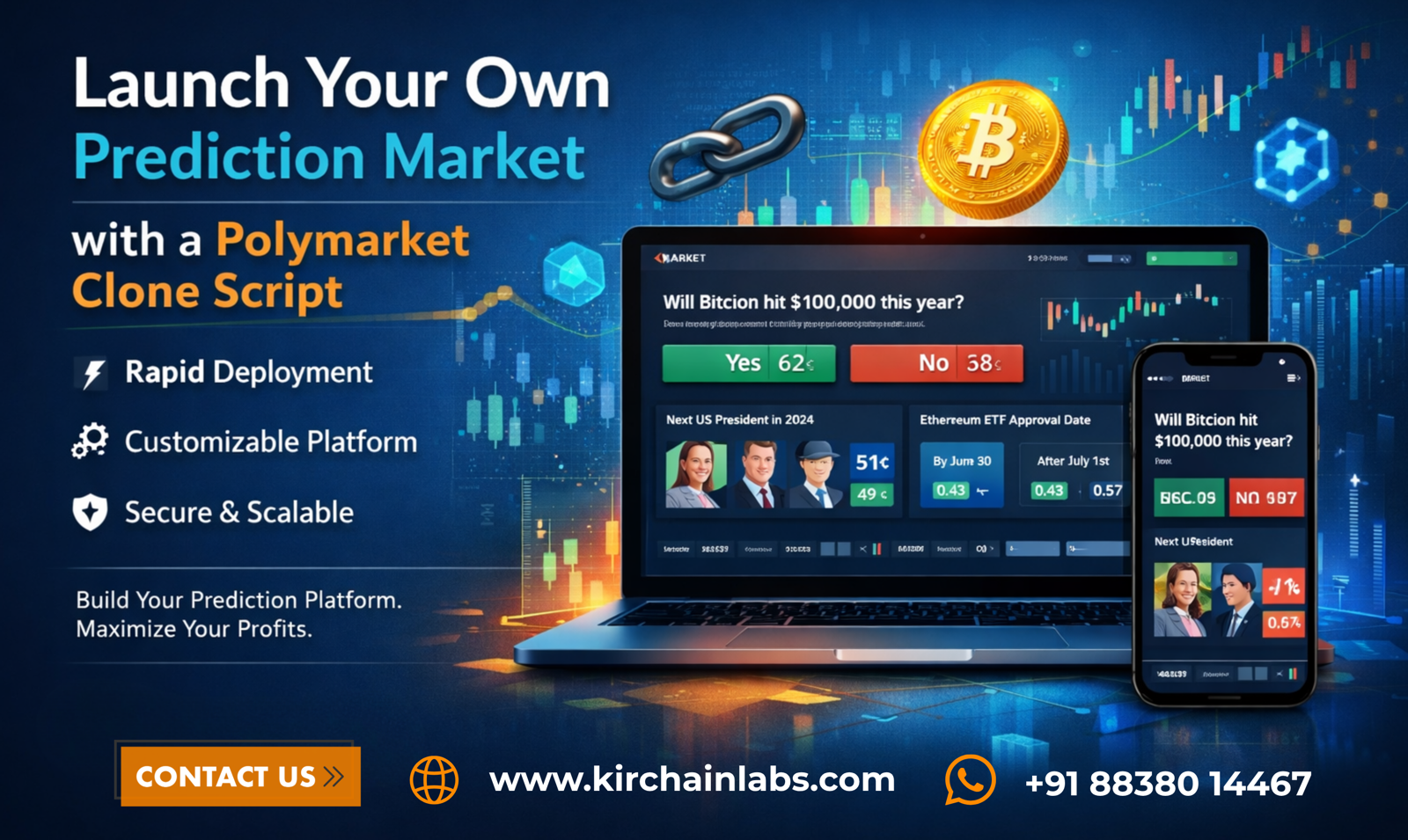
With expertise in Web3 infrastructure and advanced automation solutions, KIR Chain Labs helps businesses build intelligent prediction platforms that leverage the power of decentralized forecasting and automated market technologies.




Write a comment ...