
Introduction
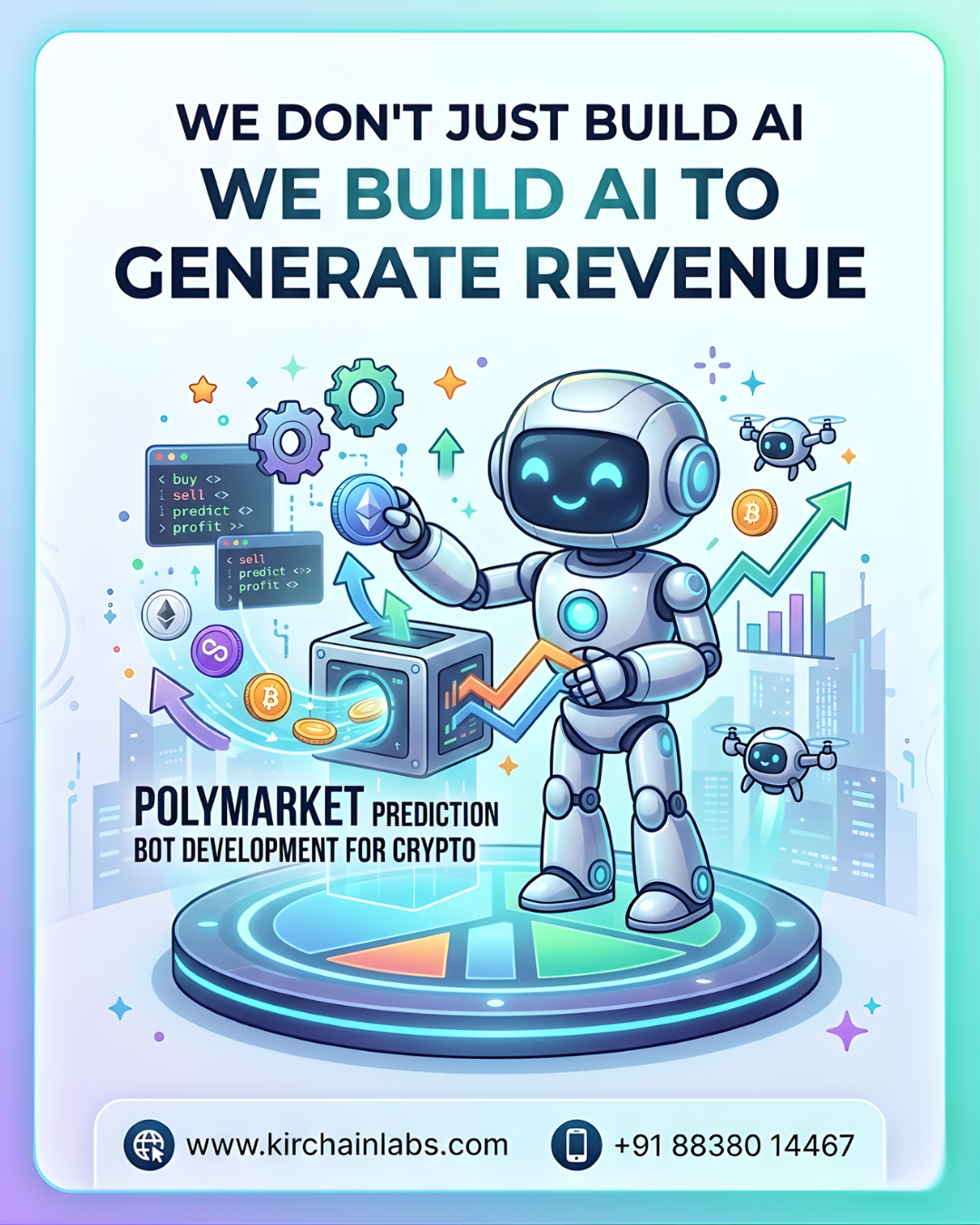
Prediction markets operate in a real-time environment where probabilities shift within seconds based on global events, breaking news, and trader sentiment. In such a fast-moving ecosystem, Automation turns into a need rather than just a benefit. This is where polymarket prediction bot development plays a transformative role, enabling traders and businesses to deploy intelligent systems that execute trades instantly using predefined logic.
Rather than relying on human intuition, prediction bots use structured algorithms, live market data, and automated execution frameworks to identify statistical opportunities. When properly designed, these systems operate with speed, precision, and consistency, helping participants navigate volatile event-driven markets more efficiently.
What Is a Polymarket Prediction Bot?
A Polymarket trading bot is an automated software system designed to interact directly with prediction market platforms. It monitors event probabilities, liquidity depth, and price fluctuations, then executes trades based on rule-based algorithms without human intervention.
Its primary objective is to eliminate emotional bias while improving execution efficiency. The system follows predefined instructions and mathematical models to determine when to enter or exit a position.
Core Components
· API connectivity with the trading platform
· Real-time data processing engine
· Algorithmic trading strategy module
· Risk management configuration
· Automated order execution system
Each component works together to ensure accurate decision-making and seamless trade execution.
How Do Polymarket Prediction Bots Work?
Prediction bots operate through a structured workflow that transforms live data into automated trading decisions.
1. Market Data Monitoring
The bot continuously collects and analyzes live market data. This includes pricing changes, liquidity variations, order book depth, and probability adjustments. By scanning these variables in real time, the system detects inefficiencies or shifts that align with its programmed strategy.
Key areas monitored include:
· Order book structure
· Liquidity depth
· Historical price behavior
· Trading volume trends
· Event probability fluctuations
This constant monitoring allows the bot to react instantly when predefined conditions are met.
2. Strategy Execution Logic
Once the system identifies a valid signal, the algorithm activates. Every decision is based strictly on logical rules and mathematical thresholds rather than speculation.
Common strategy models include:
· Arbitrage opportunities
· Market-making frameworks
· Trend-following logic
· Statistical probability analysis
Each strategy defines entry signals, exit triggers, and capital allocation rules. Because the logic is systematic, execution remains consistent even during high volatility.
3. Automated Order Placement
After confirmation, the bot places buy or sell orders automatically. Execution speed is critical, as prediction markets can shift rapidly due to external developments.
Execution capabilities typically include:
· Instant order submission
· Dynamic order adjustments
· Automatic cancellation of invalid signals
· Continuous position tracking
This automation ensures trades are executed at optimal timing without hesitation.
4. Integrated Risk Control
Risk management is embedded within the system architecture. The bot constantly evaluates exposure and adjusts positions when predefined thresholds are reached.
Risk measures often include:
· Stop-loss limits
· Exposure caps per market
· Diversified capital allocation
· Predefined exit strategies
This structured protection safeguards long-term sustainability.
Why Businesses Use Prediction Bots
While individual traders use bots for efficiency, businesses leverage them for scalability and structured revenue generation.
Organizations adopt prediction bots to:
· Enable 24/7 automated trading operations
· Reduce manual operational overhead
· Ensure consistent strategy execution
· Improve response time to market events
· Create scalable algorithmic trading infrastructure
For enterprises, automation transforms prediction trading into a systematic process rather than a speculative activity. Bots provide measurable performance metrics, controlled risk exposure, and structured capital deployment. In competitive markets, automation becomes a strategic asset that supports data-driven decision-making and operational efficiency.
How to Develop a Polymarket Prediction Bot
Building a reliable prediction bot requires a methodical development approach.
Step 1: Strategy Design
Development begins with defining a clear trading strategy. This stage determines the logical framework that governs every trading action. The strategy must outline entry and exit conditions, risk-to-reward ratios, trade size calculations, and probability thresholds.
Backtesting the strategy against historical data is essential to evaluate potential profitability and identify weaknesses before live deployment.
Step 2: Secure API and Infrastructure Setup
After strategy validation, the system must be connected to the trading platform using secure API integration. This enables real-time data retrieval and automated order execution.
At this stage, developers configure authentication protocols, encryption standards, and secure wallet interactions. Stability and security are critical to prevent trade failures or unauthorized access.
Step 3: Risk Management Implementation
Risk management is integrated directly into the algorithm. Developers define exposure limits, capital allocation rules, and automatic stop mechanisms. The system should reduce or close positions automatically if risk parameters are breached. This ensures disciplined trading behavior even during extreme volatility.
Step 4: Testing and Simulation
Before live deployment, the bot must undergo comprehensive testing. This includes backtesting with historical data and forward testing in simulated environments.
Testing priorities include:
· Strategy accuracy evaluation
· Volatility stress testing
· Execution speed analysis
· Error handling validation
· Performance consistency checks
Thorough testing minimizes unexpected disruptions.
Step 5: Deployment and Continuous Optimization
Once validated, the bot is deployed on reliable cloud infrastructure to ensure uninterrupted 24/7 operation. Monitoring tools track performance metrics such as ROI, win-loss ratio, execution latency, and capital utilization.
Markets evolve constantly, so strategies require periodic refinement. Developers analyze performance data and adjust parameters to maintain competitiveness and efficiency over time.
Conclusion
Polymarket prediction bots function through structured data analysis, algorithmic decision-making, automated execution, and disciplined risk control. Their effectiveness depends on clear strategy design, secure technical integration, and continuous optimization. When properly developed, these systems transform event-driven trading into a systematic, scalable process.
Successful polymarket prediction bot development requires expertise in blockchain integration, quantitative modeling, and secure infrastructure design. Businesses aiming to build scalable and high-performance automated trading systems can benefit from partnering with experienced firms like KIR Chain Labs, a leading crypto trading bot development company known for delivering intelligent and reliable automation solutions tailored to modern prediction markets.













Write a comment ...